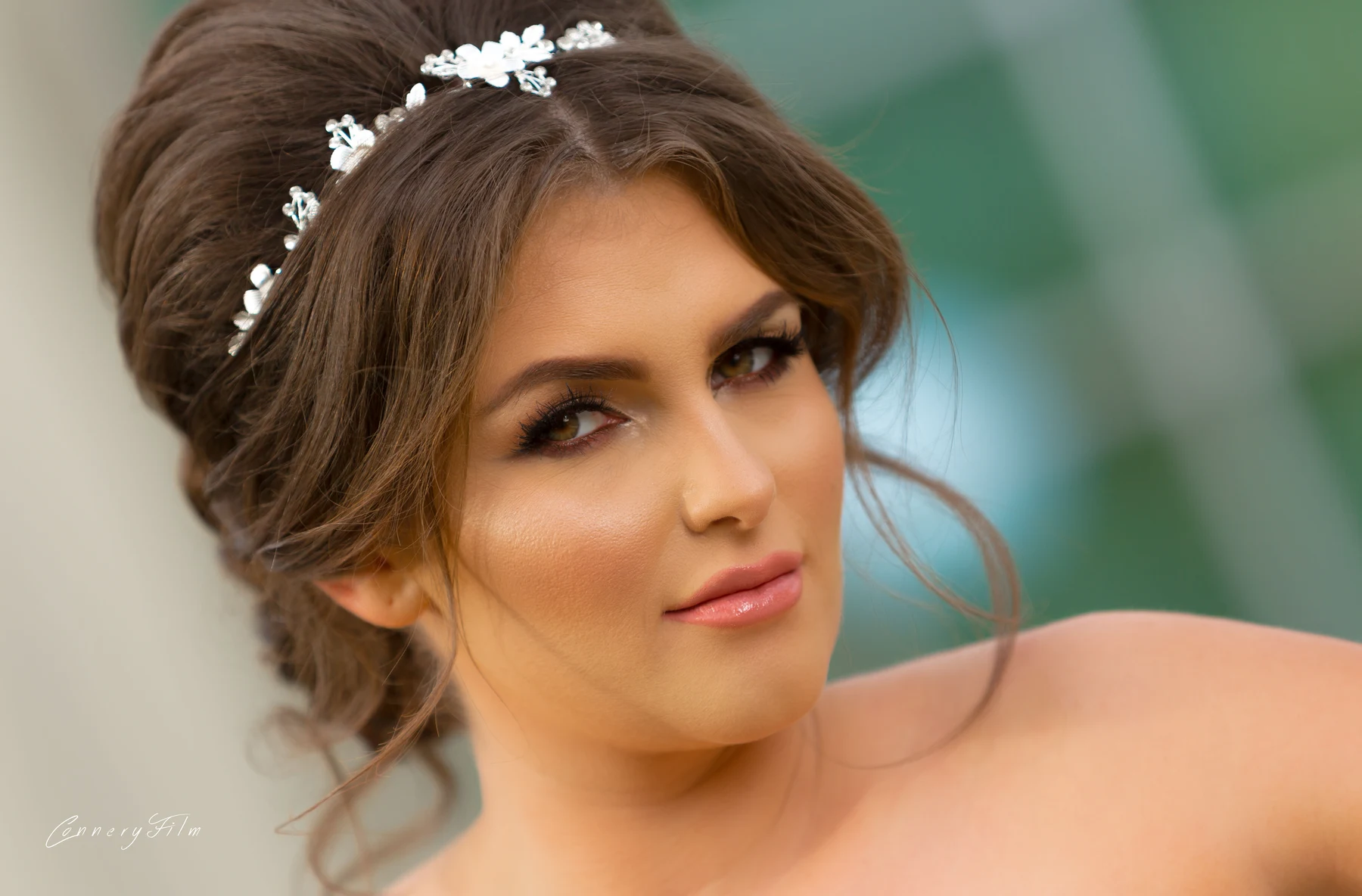
Couples ask me this in almost every consultation, usually after they've fallen down a Pinterest hole at midnight. So let me give you the straight answer. Cinematic wedding photography is a style where each frame is built to feel like a still pulled from a film — dramatic light, real emotion, intentional composition, and color that has a mood to it. It's not a filter. It's not a preset you buy for nineteen dollars. It's a way of seeing and shooting that I've spent 17 years refining across LA rooftops, Malibu bluffs, and Downtown lofts.
Here's the thing though. The word "cinematic" gets thrown around so much it's almost lost meaning. Every photographer in Los Angeles slaps it on their website. So I want to tell you what it actually means when someone knows what they're doing — and how to spot the real thing before you sign anything.
The short version: it looks like a movie, not a snapshot
Think about your favorite film. The way the light falls across an actor's face. The way the background melts into soft color while the subject stays sharp. The way a single frame can make you feel something before anyone says a word. That's what I'm chasing when I shoot cinematically.
A snapshot documents that something happened. A cinematic photograph makes you feel what it felt like to be there. Same moment, completely different weight. When I photograph a bride's father seeing her for the first time, I'm not just recording his face — I'm using the direction of the window light, the space around him, and the exact moment his expression breaks to build a frame you'll want to hang on a wall.
What actually makes a photo "cinematic"
People assume it's all in editing. It isn't. Honestly, I think the editing is maybe 20% of it. The rest happens in the room, in the second before I press the shutter. Here's what I'm actually managing:
- Light with direction and drama. Flat, even light is safe and boring. Cinematic light has shadow. When I'm shooting a couple on a Downtown LA rooftop around 6:45pm in summer, I'll turn them so the last hard sunlight rakes across from the side. That shadow is what gives a face dimension.
- Shallow depth of field. That dreamy, blurred background isn't an accident. I shoot a lot at f/1.4 to f/2 with fast prime lenses so your faces pop off a soft, painterly backdrop. It's a big part of the "film" feel.
- Composition and negative space. Cinematographers don't center everything. Neither do I. Sometimes I'll place a couple small in a huge frame — the sweeping lawn at an estate in Pasadena, the fog rolling in at a Malibu ceremony — so the environment tells part of the story.
- Color grading, not filtering. I grade tones the way a colorist grades a movie. Warm skin, controlled highlights, deep but not crushed shadows. A cohesive palette across the whole gallery so it feels like one story, not 800 random pictures.
- Real, unforced moments. Cinematic doesn't mean stiff. The best frames come from letting things breathe. This is where the line between candid and posed photography gets interesting — cinematic work usually lives in the space between the two.
Cinematic isn't the same as moody, and it isn't the same as candid
Let me bust a myth here, because this one costs couples money. A lot of people think "cinematic" means dark, desaturated, and gloomy. That's just one flavor — moody. You can shoot bright, airy, and still be deeply cinematic. Think of a warm, sun-drenched romance film versus a brooding thriller. Both are cinematic. Both are intentional.
I'll be blunt: some photographers hide behind heavy dark edits because it covers up weak light and weak composition. Real cinematic work holds up whether it's bright or dark, because the bones underneath — the light shaping, the framing, the timing — are solid. If a photographer's whole "style" disappears the second you ask for a brighter edit, it was never a style. It was a crutch.
Candid photography is a different axis entirely. Candid is about how posed or unposed the moment is. Cinematic is about how the image is crafted. You can have a candid frame that's cinematic and a candid frame that's just a lucky grab shot. If you're still sorting out which look fits you, my guide on choosing a wedding photography style walks through it without the jargon.
How I actually shoot this way on a Los Angeles wedding day
Theory is nice. Here's how it plays out on a real timeline. LA gives you incredible light if you respect it — and punishes you if you don't.
Getting ready. Hotel rooms in LA are usually cluttered and lit with ugly overhead tungsten. I kill the room lights and shoot by the window. That soft, directional daylight is what makes those quiet moments — the veil, the cufflinks, mom zipping the dress — feel like film. If you're wondering whether these are worth the time, they are, and I broke down why in my post on getting ready photos.
Ceremony. A noon ceremony in full sun at a beach in Malibu is the hardest light of the day — harsh, contrasty, squinty. I position and expose for the faces and let the highlights do their thing. An outdoor ceremony at 5pm under filtered light is a dream. Timing matters more than most couples realize.
Portraits at golden hour. This is where cinematic photography earns its name. The 30 to 45 minutes before sunset in LA — that low, golden, warm light — is money. I build the timeline around it every single time. Backlit, rim-lit, glowing. If you take one thing from this post: protect your golden hour.
Reception. Once the sun's gone, I shoot with off-camera flash to sculpt light instead of flattening the room. Dance floor frames with movement, drama, and edge — that's deliberate lighting, not a pop-up flash on top of the camera.
Why photo and film together makes cinematic work stronger
Here's something most studios won't tell you. Cinematic photography and cinematic film are cousins — they share the same DNA of light, movement, and story. At ConneryFilm we shoot both photography and cinematic video under one roof, one team, one plan for the day. That's not a sales line, it's a practical advantage.
When my photo and video teams aren't fighting each other for position or arguing about who gets the golden-hour window, the whole day flows better and both crafts come out stronger. Two separate vendors who've never met? I've watched that go sideways plenty of times — one blocks the other's shot, timelines clash, the couple gets stuck refereeing. If you're weighing whether to book both, I laid out the real trade-offs in this piece on video versus photography. And if you want the film side explained the same way I just explained the photo side, read what a cinematic wedding video is.
What cinematic wedding photography costs in Los Angeles
Let's talk numbers, because "cinematic" is often used to justify a price. In LA, genuinely cinematic wedding photography from an experienced shooter typically runs $3,500 to $8,000+ for photo coverage alone. Bundled photo and film packages usually land in the $6,000 to $15,000 range depending on hours, second shooters, and deliverables.
Could you find someone charging $1,200 and calling it cinematic? Sure. Sometimes it's a rising talent with a great eye and a small portfolio. Often it's a preset and a prayer. Look at full galleries, not a curated highlight reel of ten frames — I explain why in my post on seeing a full gallery before booking. The whole gallery is where the truth lives.
How to tell if a photographer's cinematic style is real
- Ask to see a full wedding, start to finish. Getting ready to reception. Cinematic work should hold up in the ugly-light moments, not just at sunset.
- Look for consistency of color and mood across the whole day. One cohesive look means real grading, not random editing.
- Check the light in dark venues. Anyone can nail golden hour. The pros show me sculpted, dramatic reception frames too.
- Notice the moments. Are people feeling something, or just posing? Cinematic without emotion is just pretty wallpaper.
FAQ
Is cinematic wedding photography the same as cinematic wedding video?
No. They're related but separate. Cinematic photography is still images crafted to feel filmic. Cinematic video is motion — movement, sound, pacing, music. They pair beautifully, which is exactly why some studios, mine included, do both together, but they're distinct crafts with different skill sets.
Does cinematic mean my photos will be dark and moody?
Not unless you want them to be. Moody is one style within cinematic. You can absolutely have bright, warm, romantic cinematic photos. Tell your photographer the mood you want and look at galleries that match it before you book.
Will cinematic editing make my photos look overly filtered or fake?
It shouldn't. Good cinematic editing is subtle color grading that keeps skin tones natural and true. If a photographer's edits look like a heavy Instagram filter, that's a red flag, not a style. The craft is in restraint.
Do I need golden hour for cinematic wedding photos?
You don't strictly need it, but it's the easiest gift LA gives us. I build timelines around the 30 to 45 minutes before sunset whenever possible. If your schedule can't allow it, a skilled photographer will still create cinematic frames with off-camera lighting — it just takes more effort and gear.
How long until I get my cinematic wedding photos back?
For me, edited galleries typically deliver in 4 to 8 weeks depending on the season. Cinematic grading takes real time because every frame is handled with intention, not batch-processed. Ask any photographer for their exact turnaround in writing before you book.
If you're planning a Los Angeles wedding and you want photography and cinematic film that actually feel like something years from now, I'd love to hear about your day. Call or text 818.749.7039 or reach out through ConneryFilm.com — tell me your venue and your vision, and I'll walk you through exactly how I'd shoot it, one team, one seamless experience, no pressure.
Meet the Author: Connery Davoodian Hello, I'm Connery Davoodian, the visionary behind ConneryFilm, and I'm thrilled to share insights from my 17-year journey through the world of wedding photography and videography. My passion extends beyond simply capturing images; it's about artfully weaving your unique love story into a timeless, cinematic masterpiece. My artistic path began long before I ever picked up a camera, deeply rooted in music as a singer, songwriter, and multi-instrumentalist. This diverse background in directing, producing, and editing has cultivated a unique perspective, allowing me to approach each wedding not just as an event, but as a dynamic narrative waiting to be beautifully told. This blend of technical mastery and creative storytelling is the heartbeat of ConneryFilm, ensuring that every frame, every shot, and every film is infused with depth, emotion, and unparalleled artistic integrity. At ConneryFilm, we believe your wedding memories deserve nothing less than bespoke luxury. My philosophy centers on capturing the authentic, unscripted moments – the genuine smiles, the tender glances, the joyful laughter – that truly define your day. While we obsess over exquisite details and sophisticated aesthetics, our true joy comes from making you feel completely at ease, like a "friendor" who genuinely celebrates alongside you. This calm, organized presence allows your true personalities to shine, resulting in images and films that are as real and vibrant as your love itself. Based in the heart of Los Angeles, California, my team and I are privileged to serve couples across the globe, bringing our signature high-end wedding photography and videography to destination weddings worldwide. Through these blog posts, I aim to share invaluable insights, luxurious inspiration, and practical, fun advice to guide you through your wedding planning journey, helping you make informed decisions about preserving your most cherished moments. Thank you for trusting ConneryFilm to be a part of your extraordinary adventure. I'm excited to share my knowledge and passion with you, helping you create memories that will last forever.