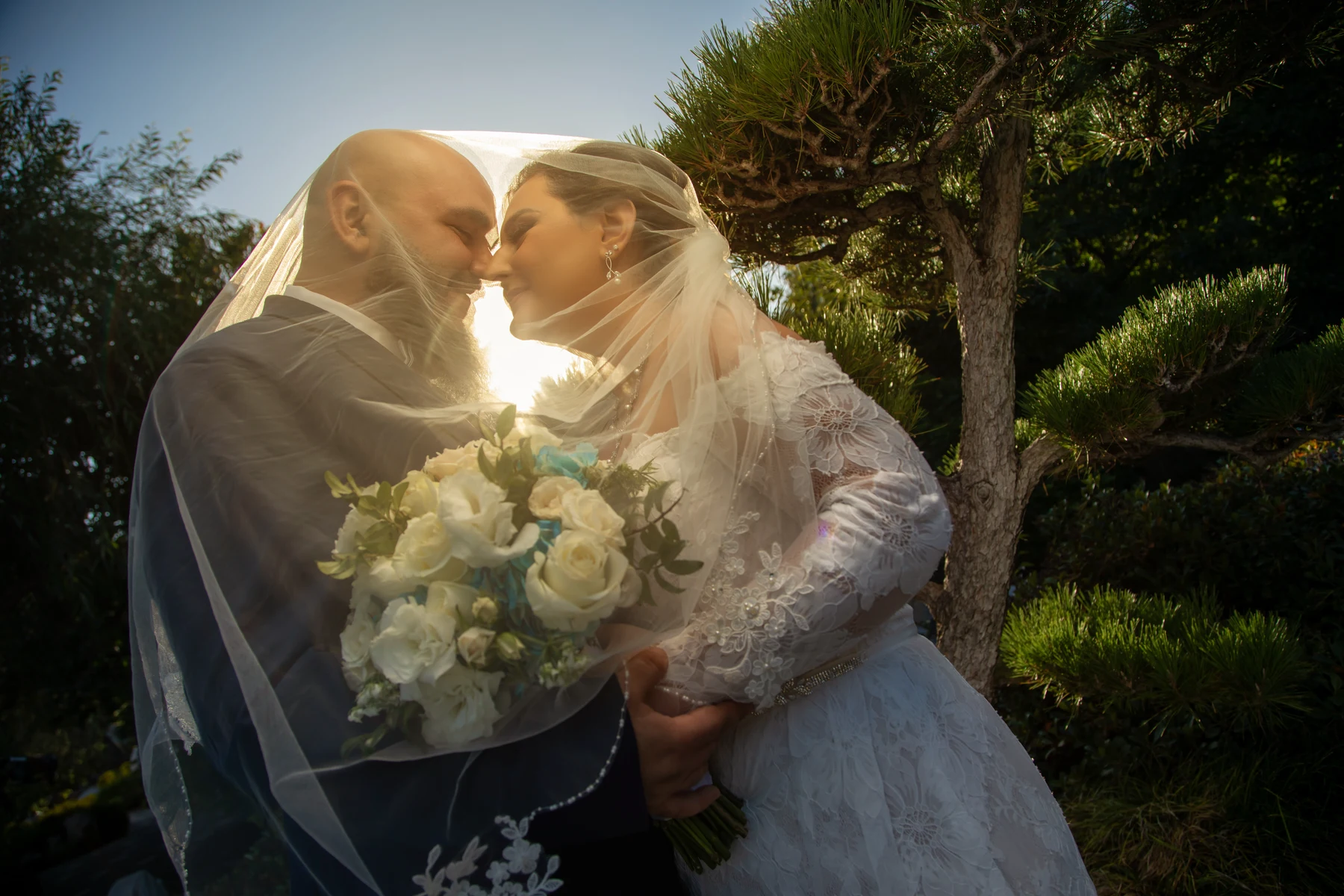
I'm Connery Davoodian, and I've spent 17 years photographing and filming weddings across Los Angeles. A large share of them have been Persian and Iranian weddings, and most of those didn't happen in Westwood — they happened in Encino, Tarzana, Woodland Hills, Sherman Oaks and Calabasas, in the banquet halls and country clubs where a lot of Persian LA actually lives and marries. I speak Persian, I know how the day runs from the sofreh to the last bandari track of the night, and I run one team for both photo and video so you're not choreographing two vendors who've never met.
This page is about the tradition, not a zip code. If you were born into it, you already know what I'm about to describe. If you're marrying into it, read on — I'll name each ritual plainly so nothing surprises you on the day.
Why the Valley Persian wedding is its own thing
The rhythm of a Persian wedding is split into two halves that a lot of photographers conflate, and getting them wrong wastes your money. First is the aghd — the actual marriage ceremony, held in front of the sofreh aghd, the elaborate spread laid out on the floor or a low table. Then comes the jashn, the celebration and dinner. Sometimes they run back to back in the same room with a flip; sometimes the aghd is at a home or a garden in the afternoon and the jashn is at a hall that evening. The timing decision drives everything about coverage, and I ask about it in the first conversation, because it changes when I arrive and whether we're chasing daylight or shooting a candlelit spread.
The sofreh aghd is the single most photographed object of the entire day, and here's my blunt stance: it must be shot clean, before a single guest walks in. Once the room fills, there are handbags, phones and elbows in every frame, and the mirror (aineh-ye bakht) at the head of the spread starts catching reflections you don't want. Families spend real money on the sofreh — the termeh cloth, the flatbread with calligraphy, the honey, the candelabras, the decorated eggs and sugar cones. I treat it like a still-life set, level and detailed, then I get out of the way. A photographer who doesn't know the customs shows up too late for this and you never get it back.
The moments during the aghd I'm positioned for
During the aghd itself, several things happen fast and quietly, and if you don't understand Persian you'll physically be in the wrong spot for them. As the officiant asks the bride for her bale ("yes"), tradition holds that she stays silent the first two times while a female relative jokes that she's "gone to pick flowers" — the room laughs, and the real answer comes on the third ask. I'm reading that back-and-forth in the language, so I'm already framed on the bride's face and the family's reaction when it lands, not guessing off body language a beat late.
Above the couple, married women hold a canopy of fabric while two people grind sugar cones together (kalleh ghand) to shower sweetness over the marriage. Then the couple dip fingers in honey and feed each other. These are close, tender, crowded beats — I shoot them tight and low so the canopy frames the couple instead of cutting them off. And the raghs-e chaghoo, the knife dance: a relative dances the cake knife over to the couple and playfully won't hand it over without a tip or a dance in return. It's funny and it's fast, it moves through the crowd, and it needs a photographer tracking it backward through a tight room. Miss where it starts and you miss the joke entirely.
Because I bring photo and video as one team rather than two separate vendors, my second shooter and my cinematographer already know these cues — nobody's clipping into someone else's shot during the honey or the knife dance. If you're weighing whether that second body is worth it for a big aghd, I break it down honestly here.
The Valley venues I actually know
I'm based in West Hills, which means I can drive to most of these and scout them in person before your date at no cost — walking the light at the hour your aghd is scheduled, not guessing from a website.
- Anoush "The Landmark" (LA Banquets), Mission Hills — one of the big Persian ballrooms, seating well over 800. Cavernous and dark once the lighting design kicks in, so I plan flash and know where the sofreh setup lands relative to the entrance for that clean early shot.
- Glenoaks Ballroom (LA Banquets), Glendale — same family of halls, another room I've worked; the flip from aghd to jashn tends to be tight here, so I shoot the sofreh the moment it's dressed.
- Porter Valley Country Club, Northridge — runs a huge volume of weddings and gives you a garden option for an afternoon aghd with an indoor jashn to follow. Good separation of daylight and evening looks.
- Warner Center Marriott, Woodland Hills — a classic Valley hotel ballroom, three miles from me. Reliable, controllable light and easy load-in for a full crew.
- Hilton Woodland Hills — another dependable ballroom room I know; predictable ceiling height and staging for a large jashn.
- King Gillette Ranch, Calabasas — a historic estate and park setting for couples who want the aghd outdoors under oaks. Permit-managed grounds, and the light through those trees in late afternoon is worth timing the ceremony around.
- Odyssey Restaurant & Events, Granada Hills — a view venue up the hill; the outdoor terrace gives a real skyline backdrop for portraits between aghd and dinner.
- The Garland, North Hollywood — hotel and garden combination that's been doing weddings for decades, good for a garden aghd with a covered contingency.
- Four Seasons Westlake Village — the luxury end for a Valley-adjacent Persian wedding, with resort grounds that hold portraits and a controlled ballroom for the jashn.
If your hall isn't on this list, it doesn't matter — I scout venues I haven't shot before, and I'd rather walk your room than wing it.
Light, traffic and timing in the Valley
The Valley bakes. An outdoor aghd at 2pm in Encino in July is harsh overhead sun and squinting relatives, so I push families toward late-afternoon ceremony times whenever the venue allows, and I build the day around the light — that's how I've worked for 17 years. LA golden hour is short and it moves, so I steal the couple for ten minutes when the light is right rather than fighting the schedule. On timing generally, I plan a full day the way I lay out in this realistic LA timeline, and I arrive well before you're dressed so the sofreh, the getting-ready and the family photos all get their room. And yes — the 101 and the 405 will punish you; I build travel between a home aghd and a hall jashn into the plan rather than pretending it's ten minutes.
FAQ
Do you actually speak Persian, or do you just say that?
I speak it, and it matters most during the aghd. I follow the officiant, the bale exchange and the family's jokes in real time, so I'm framed on the moment before it happens instead of reacting to a reflex I half-caught.
We're doing the aghd and jashn on the same day in the same room. Is that a problem?
Not at all — it's the most common setup I shoot in the Valley. The key is shooting the sofreh clean during setup, before guests arrive, and planning the flip so I'm ready for grand entrance and first dance without a gap in coverage.
One of us isn't Persian. Will you explain what's happening?
That's a big part of why couples call me. I walk you through the honey, the sugar grinding under the canopy, and the knife dance beforehand so nothing catches you off guard, and I photograph them so your side of the family understands them too.
Can you scout our venue before the wedding?
Yes, and because I'm in West Hills, I do it in person at no cost for most Valley halls, country clubs and estates — checking the light at your actual ceremony hour and where the sofreh will sit.
If you're planning a Persian or Iranian wedding anywhere in the Valley — Encino, Tarzana, Woodland Hills, Sherman Oaks, Calabasas or beyond — let's talk through your aghd and jashn before you lock a timeline. Call or text (818) 749-7039 or reach me through the contact page, and I'll tell you honestly what your day needs.