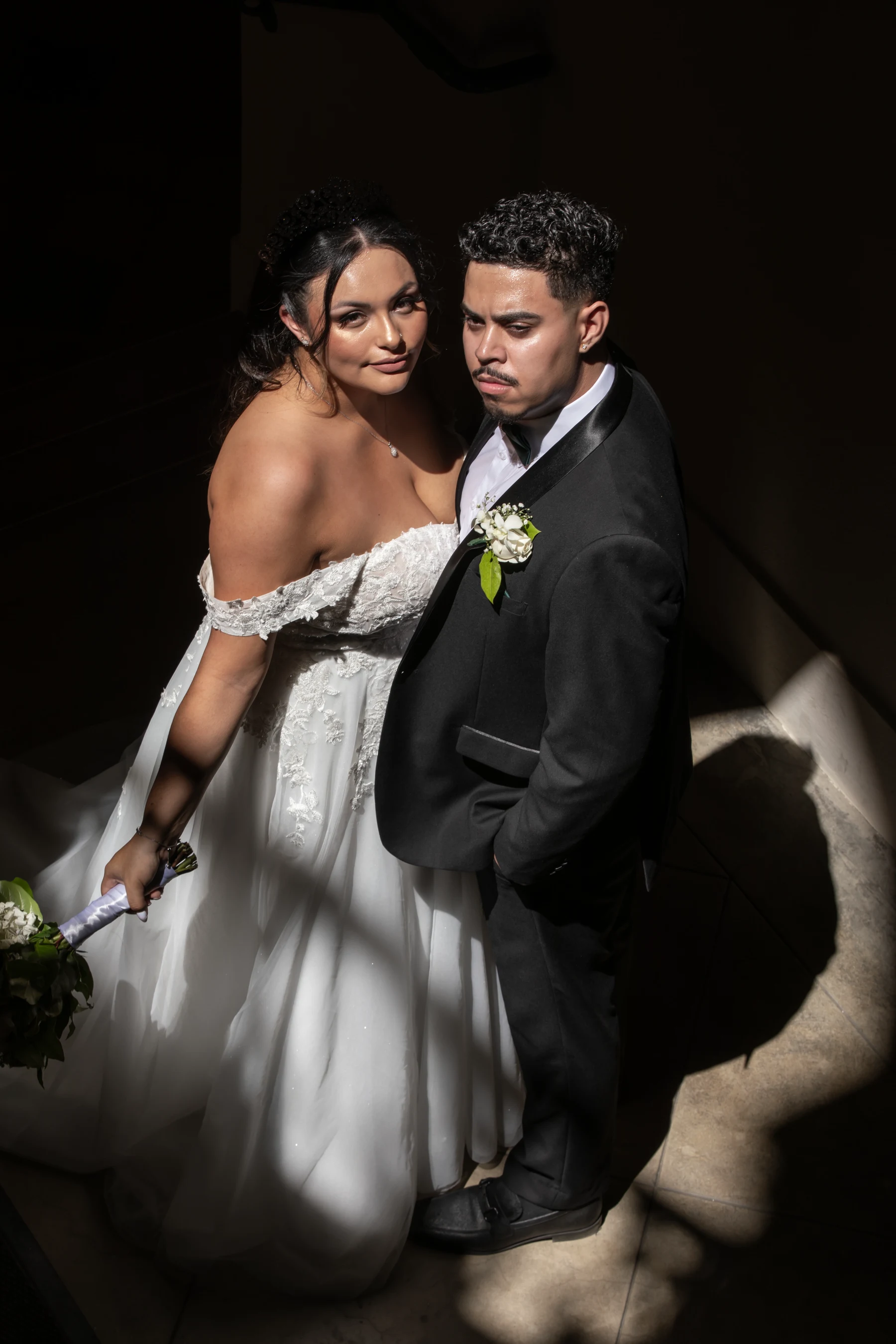
Couples ask me about the types of wedding photography almost every week, usually about ten minutes into a consultation, usually right after they've scrolled through forty Instagram accounts in Los Angeles and started to feel like every photographer does the same thing. They don't. The differences are real, they change what your gallery looks like in twenty years, and almost nobody explains them in plain English.
So here it is. Seven types, what each one actually costs and does in LA, and which ones I use on a real wedding day. I've been shooting here for 17 years, and I'll tell you up front: nearly every good photographer working in this city is a blend of two or three of these. Anyone selling you a single pure style is selling you a brand, not a body of work.
1. Traditional (classic, posed, portrait-driven)
The oldest type and the one everyone quietly wants more of than they admit. Traditional wedding photography means directed portraits: the two of you looking at the camera, the family groupings, the bridal party lined up somewhere with good light, the ring shot, the dress hanging in the window.
People love to say they don't want posed photos. Then their grandmother passes away three years later and the only frame anyone reaches for is the posed family shot. I'll be blunt: skipping traditional coverage entirely is the single most common regret I see. Budget 30 to 45 minutes for family formals and give me a list of no more than 12 to 15 groupings. At most LA venues, that block runs right after the ceremony and it will eat your cocktail hour if it isn't planned.
Traditional work is where lens and light discipline show. If a photographer's family formals look flat and gray, that tells you more than their sunset portfolio does.
2. Photojournalistic (documentary, unposed)
Documentary coverage means I stand back, say nothing, and shoot what happens. Your dad's face during the first look. The bridesmaid crying into a napkin. The uncle who cannot get his boutonniere on. Nobody is arranged, nobody is asked to redo anything.
This is the biggest share of most modern wedding galleries — I'd say 60 to 70 percent of what I deliver from an 8-hour LA wedding is unposed. It is also the hardest type to fake. Anyone can put two beautiful people in golden light on a Malibu bluff. Reading a room and knowing which shoulder to be standing behind three seconds before something happens is the actual skill, and it takes years.
If documentary is what you care about most, look at whether the photographer shows you reception photos, not just portraits. Dark rooms, moving people, mixed color light. That's where documentary photographers either hold up or fall apart. I go deeper on the tradeoffs in why you actually want both candid and posed coverage.
3. Editorial and fashion
Editorial wedding photography borrows from magazine work: strong posing, deliberate styling, a lot of attention to lines and negative space. The couple is placed inside architecture. The dress is treated like wardrobe. Think a rooftop in Downtown LA at 6:45pm, hard shadows, one strong pose held for four frames.
It photographs incredibly well on a website. It can also feel cold if it's the only thing in your gallery, because editorial work is about the image, not the moment. The couples who love editorial results are usually the ones who genuinely enjoy being photographed and who chose a venue with real architectural character — the Ebell, the Millwick, the Hotel Figueroa, anywhere with columns and texture rather than a lawn.
One warning: editorial work needs time. A photographer shooting a real editorial set needs 25 to 40 uninterrupted minutes with you, not the eight minutes left after the ceremony ran long.
4. Fine art
Fine art is the softest of the types — pastel tones, shallow focus, a lot of air in the frame, often shot wide open around f/1.4 to f/2. It leans romantic and slightly dreamy. In LA it pairs beautifully with the estate and garden venues: Hummingbird Nest Ranch, Calamigos, the Ojai and Malibu properties, anywhere with old trees and warm stone.
Honestly, I think fine art is the style most likely to date. The pale, washed, low-contrast look that everyone booked in 2016 is exactly what makes those galleries feel like 2016. If you love it, book it — but ask the photographer to also deliver a set of neutral, true-color edits, because color trends move and skin tone doesn't.
5. Film photography (and the hybrid shooters)
A small number of LA photographers still shoot actual film — Contax 645, Pentax 67, Portra 400 — usually alongside digital rather than instead of it. The look is genuinely different: gentler highlight rolloff, grain that lives in the image rather than being added in post, skin tones that hold together in harsh California midday sun.
The costs are real. Film adds roughly $600 to $1,500 to an LA wedding package once you count stock, lab scanning and the extra shooting time, and turnaround goes up because the lab is now in your timeline. There's no chimping either — a film shooter cannot show you the back of the camera, which some couples love and some find nerve-wracking. If you're weighing it, I broke down the practical differences in how film and digital actually compare on a wedding day.
6. Dark and moody vs. light and airy
These two get sold as styles and they're really edit treatments — the same wedding, graded two different directions. Dark and moody means deep shadows, muted greens, heavy contrast, blacks that sit down. Light and airy means lifted shadows, warm creamy whites, low contrast, everything glowing.
Here's the part nobody tells you: an edit treatment can be changed. Composition, timing and light cannot. So if you love a photographer's eye but you're lukewarm on their color, that's a conversation, not a dealbreaker. If you love their color but their moments are thin, no preset fixes that. This is why I tell couples to judge the shooting before the styling.
One LA-specific note: our light is very warm and very hard from about 11am to 4pm most of the year, and a light-and-airy edit fights that. If your ceremony is at 1pm on an unshaded lawn in the Valley, ask to see a full gallery from a midday wedding, not a 6:30pm one.
7. Cinematic and flash-driven work
The newest of the types, and the one growing fastest in Los Angeles: direct flash, harsh on-camera light, high contrast, a deliberately raw party-photo feel for the reception, often mixed with wide cinematic framing earlier in the day. It looks like a film still or a nineties disposable camera depending on which end of it you get.
I use flash on nearly every wedding after sunset, because LA reception lighting is usually terrible — uplights in three colors, a DJ throwing magenta across everyone's face. The question is whether the photographer uses it as a look or as a rescue. Ask to see it. And if a studio calls the work cinematic, ask what they mean by that word, because it's been stretched past the point of meaning anything.
What I'd actually do if it were my wedding
Book someone who shoots documentary as their default, can direct a clean portrait when it counts, and knows how to light a dark room. That combination covers 95 percent of what you'll want to look at later. The pure-style questions matter far less than most couples think.
Then, separately, decide whether you want the day filmed. That's the choice with the most regret attached to it, and it's the reason I built ConneryFilm to do both — photography and cinematic film under one roof, one team, one timeline. Two vendors means two people asking for the same fifteen minutes with you during golden hour, two contracts, two delivery dates, and a photographer and videographer meeting for the first time in your getting-ready room. When it's one team, the film crew already knows where I'm standing and neither of us is in the other's frame.
What each type costs in Los Angeles
- Documentary or traditional coverage, 8 hours, one photographer: $1,599 to $3,500 with most solid LA studios.
- Editorial or fine art specialists: $3,500 to $8,000, because the shooting is slower and the retouching is heavier.
- Hybrid film and digital: add roughly $600 to $1,500 on top of a digital package.
- Photography plus a cinematic film: $3,500 and up as a combined package, which is almost always less than booking two separate vendors.
- Second photographer: $500 to $900, worth it for large guest counts or two getting-ready locations far apart.
Turnaround varies by type too. A straightforward digital gallery should reach you in 4 to 6 weeks. Heavy editorial retouching or a film lab in the chain pushes that to 8 to 12.
Common questions about wedding photography types
Do I have to pick just one type?
No, and you shouldn't. A real LA wedding gallery has documentary coverage through most of the day, 20 to 30 directed portraits, family formals, and flash work at the reception. The type question is really about emphasis, not exclusion.
Which type ages the best?
Documentary and traditional, easily. Both are about what happened and who was there. Heavily stylized edits — very dark, very pastel, very filtered — are the ones that read as a specific year when you open the gallery a decade later.
How do I tell what type a photographer actually shoots?
Ask for two or three complete galleries from real weddings, not the portfolio grid. A portfolio shows you their best 40 frames from 40 different weddings. A full gallery shows you what an average Tuesday delivery looks like, which is what you're buying.
Is drone or aerial photography its own type?
Not really — it's an add-on, and a limited one in Los Angeles. Much of the LA basin sits under controlled airspace near LAX, Burbank and Van Nuys, and plenty of venues ban drones outright for noise. It's worth asking about for Malibu, Ojai and Temecula, and not worth paying much for in the city.
Does the type change how many photos I get?
Somewhat. Documentary-leaning shooters typically deliver 500 to 800 edited images from an 8-hour LA wedding. Editorial and fine art photographers often deliver fewer, 350 to 500, because they shoot more deliberately and retouch more per frame. Neither number is better; ask what's normal for them before you book.
The short version
Traditional gives you the photos your family will frame. Documentary gives you the day as it actually felt. Editorial and fine art give you the images that belong on a wall. Film gives you a particular texture at a real cost. Moody and airy are edits, not eyes. Flash is how the reception gets saved. Most great LA photographers use five of the seven on a single Saturday.
If you're trying to work out which blend fits your venue, your timeline and your budget, I'm happy to talk it through — no pitch, just a straight answer about what your day actually needs. Call or text 818.749.7039, or take a look at recent weddings and pricing at ConneryFilm.com. I'd love to hear about your wedding.
Meet the Author: Connery Davoodian Hello, I'm Connery Davoodian, the visionary behind ConneryFilm, and I'm thrilled to share insights from my 17-year journey through the world of wedding photography and videography. My passion extends beyond simply capturing images; it's about artfully weaving your unique love story into a timeless, cinematic masterpiece. My artistic path began long before I ever picked up a camera, deeply rooted in music as a singer, songwriter, and multi-instrumentalist. This diverse background in directing, producing, and editing has cultivated a unique perspective, allowing me to approach each wedding not just as an event, but as a dynamic narrative waiting to be beautifully told. This blend of technical mastery and creative storytelling is the heartbeat of ConneryFilm, ensuring that every frame, every shot, and every film is infused with depth, emotion, and unparalleled artistic integrity. At ConneryFilm, we believe your wedding memories deserve nothing less than bespoke luxury. My philosophy centers on capturing the authentic, unscripted moments – the genuine smiles, the tender glances, the joyful laughter – that truly define your day. While we obsess over exquisite details and sophisticated aesthetics, our true joy comes from making you feel completely at ease, like a "friendor" who genuinely celebrates alongside you. This calm, organized presence allows your true personalities to shine, resulting in images and films that are as real and vibrant as your love itself. Based in the heart of Los Angeles, California, my team and I are privileged to serve couples across the globe, bringing our signature high-end wedding photography and videography to destination weddings worldwide. Through these blog posts, I aim to share invaluable insights, luxurious inspiration, and practical, fun advice to guide you through your wedding planning journey, helping you make informed decisions about preserving your most cherished moments. Thank you for trusting ConneryFilm to be a part of your extraordinary adventure. I'm excited to share my knowledge and passion with you, helping you create memories that will last forever.