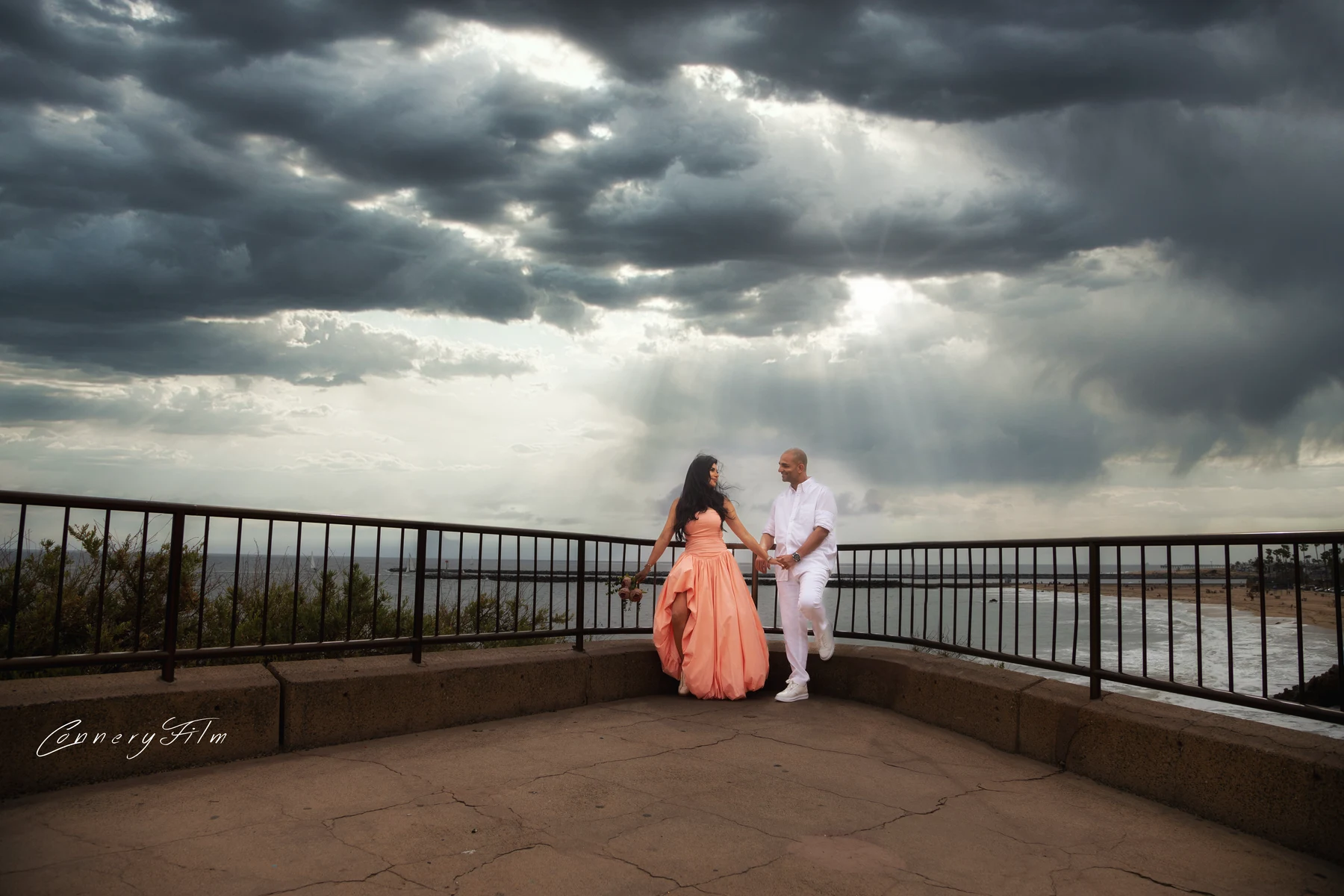
I've spent 17 years shooting and editing wedding photos in Los Angeles, and I'll tell you the part nobody says out loud at consultations: the edit is where a good wedding day becomes a good wedding album, and it's also where a lot of photos quietly get ruined. Editing wedding photos isn't about slapping a trendy filter on everything. It's about protecting the day the way it actually looked and felt. So whether you're a couple trying to understand what your photographer does after the party ends, or you're learning to edit your own work, here's how I actually approach it.
Cull first, edit second. Always.
Before I touch a single slider, I go through every frame and pull the keepers. On a typical LA wedding I'll shoot 3,000 to 5,000 frames and deliver somewhere between 500 and 900 edited images. The editing is fast. The culling is what takes discipline.
Here's the mistake I see beginners make constantly: they start color-grading a photo before they've decided whether it even belongs in the gallery. Then they've got 40 minutes into a shot of Aunt Linda blinking. Kill your darlings early. Delete the blinks, the missed focus, the near-duplicates. Pick the one frame out of the burst where the moment peaked, and edit that.
If you want a fuller picture of what those delivered numbers look like, I broke it down in how many wedding photos is normal.
Get your white balance and skin tones right before anything else
This is the single most important thing, and it's the thing most amateur edits get wrong. LA light is tricky. A ceremony under the sycamores at an estate in the Palisades goes green. A rooftop reception downtown at 6pm goes warm and orange from the tungsten string lights. Malibu beach at 4pm is brutally blue and cool. If you don't correct for that, your couple ends up looking either sunburned or seasick.
Set your white balance per lighting scenario, not per photo. Nail one reference image in each location, then sync it across that batch. Then check skin. I'll be blunt: if the skin tones are off, nothing else you do matters. No amount of moody teal-and-orange grading saves a bride whose arms have gone magenta. Pull up the tone under the eyes and the palm of the hand as your truth-tellers, because those areas don't lie the way makeup does.
Consistency is the whole game
A gallery where every third photo has a different look screams amateur. When someone scrolls your wedding gallery, the images should feel like they came from one person on one day. Same warmth, same contrast philosophy, same black point.
The way I keep that consistent: I edit in batches by scene. All the getting-ready shots together. All the ceremony together. All the golden-hour couple portraits together. That way the light and the grade move as a group, and I'm not whiplashing between a bright airy prep room and a dark dance floor. This is a big reason honest studios take a few weeks to deliver — I explained the real timeline in why wedding photographers take so long, and it's mostly this: consistency can't be rushed.
Edit to taste, not to trends
Honestly, I think the biggest disservice you can do to a couple is chase whatever look is hot on Instagram this year. Remember the heavy matte, faded-blacks look from a few years ago? It aged like milk. So did the super-orange "California golden" everything. Those couples are stuck with dated-looking galleries forever.
My rule: edit so the photos will still look beautiful in 20 years. That means clean color, natural contrast, and restraint. A little intentional style is great — I do warm my LA sunset work and lean into that glow because it's real to the moment. But if your grandkids can date your wedding to the exact year by the color of the photos, the editor got too cute. The difference between timeless and trendy is exactly what separates good from bad wedding photography.
My actual editing order (steal this)
- Culling — pick the keepers, ruthlessly.
- White balance — correct per lighting scenario.
- Exposure and contrast — get the base image looking right, no grade yet.
- Skin tone check — before you do anything creative.
- Color grade — your style, applied consistently across the batch.
- Cropping and straightening — fix horizons; a tilted Malibu horizon is unforgivable.
- Local adjustments — dodge and burn to draw the eye, brighten faces in shadow.
- Retouching — only the final selects, only what's needed.
Retouching: less than you think
Blemish that'll be gone in a week? Remove it. A stray hair across the face, a bit of shine on a forehead under harsh noon light, an EXIT sign glowing red in the corner of the reception hall — yes, clean those up. But permanent features? Leave them. Do not smooth skin into plastic. Do not slim anyone down. Do not remove the laugh lines that make a face look like a person.
Most photographers won't say this, but over-retouching is a way of telling your couple they weren't good enough as they were. I retouch so someone looks like themselves on their best day, not like a mannequin. The full-gallery retouch is also why some photographers deliver painfully slowly; I get into realistic timelines in how long it takes to get your wedding photos back.
Presets are a starting line, not a finish line
I use presets. Every high-volume pro does. But a preset is a base coat, not the whole paint job. A preset built on my Malibu golden-hour set will fall apart on a dim ballroom in Pasadena. So I apply the preset to get 70% of the way there, then hand-adjust every single image — exposure, white balance, the shadows. The couples who get burned are the ones whose photographer batch-applied one preset to 700 files and hit export. You can see it: half the gallery looks great and half looks wrong. If you're curious about the tools themselves, I wrote about what wedding photographers use to edit photos.
Match your photos and your video (this is where one team wins)
Here's something couples rarely think about until it's too late: if your photos are edited warm and clean but your wedding film comes back cold and desaturated from a completely separate videographer, the two won't feel like the same wedding. At ConneryFilm we run photography and cinematic video under one roof, one team, and we deliberately color-match the two so your gallery and your film read as one story. When two separate vendors edit in a vacuum, you end up with a beautiful photo album and a film that looks like it happened at a different event. That mismatch is impossible to fix after the fact.
What I'd tell a couple editing their own phone photos
If you're editing the casual shots your guests took, keep it simple. Fix the exposure, warm it slightly, straighten the horizon, and stop. Don't stack three filters. Don't crank the saturation until the flowers glow radioactive. The most flattering thing you can do to a wedding photo is get the light and skin right and then leave it mostly alone. Your real gallery from your photographer is where the polished, consistent work lives — let the phone snaps stay loose and honest.
FAQ
How long should editing wedding photos take?
For a full LA wedding, a professional edit realistically takes 3 to 6 weeks to deliver, sometimes 8 during peak season from May through October. The culling and color-matching across thousands of frames is the slow part, not any single photo.
Should wedding photos be edited in color or black and white?
Mostly color, with select black-and-white conversions where it serves the moment — an emotional ceremony reaction, a high-contrast dance floor shot. I deliver the color version of everything and add black-and-white as a bonus on the frames that truly earn it, rather than converting half the gallery on a whim.
Is it worth learning to edit my own wedding photos?
If they're casual guest snaps, yes — basic exposure and white balance go a long way. If we're talking your actual professional gallery, no. The consistency, skin-tone accuracy, and volume are genuinely hard, and it's a big part of what you paid your photographer for.
What's the most common editing mistake you see?
Wrong white balance and over-saturated skin. Followed closely by inconsistency across the gallery and heavy trend filters that'll look dated in three years. Get the color true first, keep it consistent, and stay restrained.
Do you edit every single delivered photo by hand?
Yes. I use a preset as a base, then adjust every delivered image individually and fully retouch the final selects. Batch-exporting a preset with no per-image work is exactly what makes half a gallery look off.
If you're planning a Los Angeles wedding and you want photography and cinematic film that are shot by one team and edited to match — so your gallery and your film actually feel like the same day — I'd love to talk it through with you. Call or text 818.749.7039 or reach out through ConneryFilm.com, and let's make sure your photos come back looking like the day you actually lived.
Meet the Author: Connery Davoodian Hello, I'm Connery Davoodian, the visionary behind ConneryFilm, and I'm thrilled to share insights from my 17-year journey through the world of wedding photography and videography. My passion extends beyond simply capturing images; it's about artfully weaving your unique love story into a timeless, cinematic masterpiece. My artistic path began long before I ever picked up a camera, deeply rooted in music as a singer, songwriter, and multi-instrumentalist. This diverse background in directing, producing, and editing has cultivated a unique perspective, allowing me to approach each wedding not just as an event, but as a dynamic narrative waiting to be beautifully told. This blend of technical mastery and creative storytelling is the heartbeat of ConneryFilm, ensuring that every frame, every shot, and every film is infused with depth, emotion, and unparalleled artistic integrity. At ConneryFilm, we believe your wedding memories deserve nothing less than bespoke luxury. My philosophy centers on capturing the authentic, unscripted moments – the genuine smiles, the tender glances, the joyful laughter – that truly define your day. While we obsess over exquisite details and sophisticated aesthetics, our true joy comes from making you feel completely at ease, like a "friendor" who genuinely celebrates alongside you. This calm, organized presence allows your true personalities to shine, resulting in images and films that are as real and vibrant as your love itself. Based in the heart of Los Angeles, California, my team and I are privileged to serve couples across the globe, bringing our signature high-end wedding photography and videography to destination weddings worldwide. Through these blog posts, I aim to share invaluable insights, luxurious inspiration, and practical, fun advice to guide you through your wedding planning journey, helping you make informed decisions about preserving your most cherished moments. Thank you for trusting ConneryFilm to be a part of your extraordinary adventure. I'm excited to share my knowledge and passion with you, helping you create memories that will last forever.