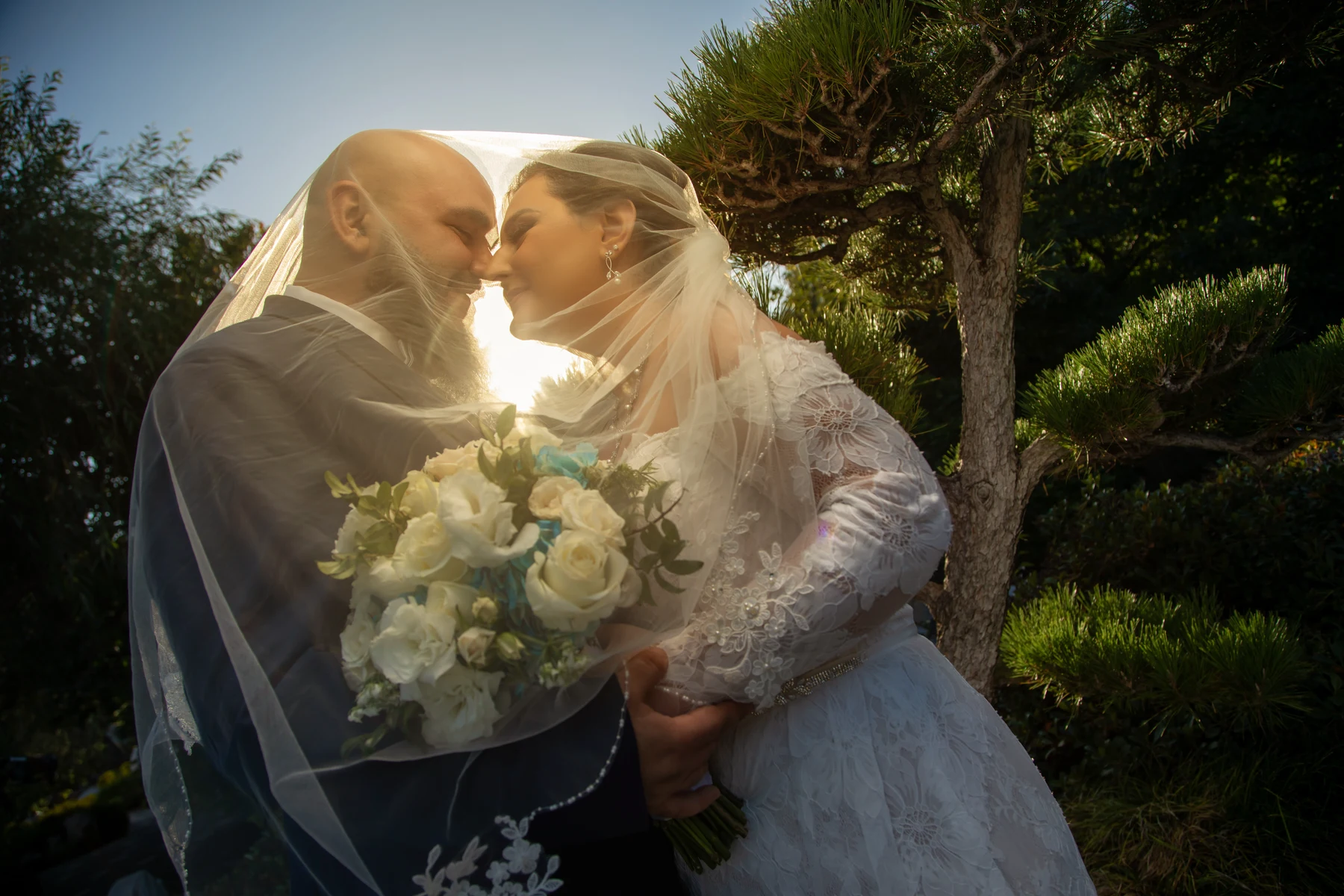
Every few weeks a couple asks me, usually at the tail end of a consultation, "So what's the best wedding photography camera — what are you actually shooting our day on?" It's a fair question. You're spending real money and you want to know the gear is up to it. So here's my honest answer after 17 years and 500-plus weddings across Los Angeles: the best wedding camera is any modern full-frame mirrorless body with dual card slots and reliable autofocus. That's it. The magic isn't in the box.
But I know that answer feels like a cop-out, so let me actually name names and explain how I think about this.
The blunt truth first
I'll be blunt: the camera matters far less than the person holding it. I've seen gorgeous, gallery-worthy weddings shot on a five-year-old Sony body, and I've seen flat, lifeless galleries shot on the newest $6,000 flagship. The camera doesn't know when your grandmother is about to cry during the toast. It doesn't know to turn around at the Sunset Restaurant in Malibu because the light is bouncing off the water for exactly eleven minutes before it dips. That's the photographer.
Most photographers won't say this because gear talk sells. But if you're choosing between two shooters and one has "newer" gear, that should not be your tiebreaker. Look at their full galleries instead — a single styled highlight reel tells you nothing.
The cameras I'd actually recommend (and shoot on)
If you cornered me and made me build a list of the best wedding photography cameras right now, here's where I'd land. These are the bodies I trust when there are no do-overs.
- Sony A7 IV / A7R V / A1 — My workhorses. The autofocus eye-tracking is so good it borders on unfair. In a dim Downtown LA reception where the DJ has killed the lights and it's all uplighting and candles, the A7 IV locks onto a face and holds it while people are dancing. That's not a small thing at 10pm.
- Canon EOS R5 / R6 Mark II — Color science that clients love straight out of camera, especially skin tones. The R6 II in low light is a beast. Canon shooters tend to swear by the way it renders warmth, and honestly they're not wrong.
- Nikon Z8 / Z9 — Rugged, incredible dynamic range, files that take a beating in editing. If I were photographing an outdoor ceremony in harsh midday sun at a Pasadena estate, that dynamic range pulls detail back into blown-out highlights and crushed shadows.
Any of those three brands will serve you beautifully. If you want me to go deeper on the two-brand rivalry that dominates this conversation, I broke it down in my post on Sony vs Canon for wedding photography — spoiler, both win.
What actually makes a camera "good enough" for a wedding
Forget megapixel bragging rights. Here's the short list of features that genuinely matter on a wedding day, in order:
- Dual card slots. Non-negotiable. When I'm shooting, every image writes to two cards at once. If one card corrupts — and cards do fail — I still have your ceremony. Ask any photographer you're considering if their camera has this. If they shrug, walk away.
- Low-light performance. Weddings live in bad light. Dim churches, sunset first dances, a getting-ready room with one sad window. A body that stays clean at ISO 6400 and usable at 12800 is worth more than one with extra resolution.
- Fast, sticky autofocus. Eye-detect AF is the single biggest leap of the last decade. It means I can shoot wide open at f/1.4 during the first look and trust the eyes are tack sharp.
- Reliability and battery life. A ceremony doesn't pause for a dead battery.
Resolution? Anything from 24 to 45 megapixels is plenty. Nobody has ever asked me to enlarge a wedding photo to the side of a building.
Why I always shoot with two bodies
Here's something couples rarely think about. It's not just what camera — it's how many. I never shoot a wedding with a single body. Two cameras, minimum, on me at all times, plus backups in the bag. One with a 35mm for wide storytelling moments, one with an 85mm for tight, compressed portraits. During your ceremony recessional I'm not fumbling to swap lenses — I lift the other camera. That's part of why gear conversations should really be about redundancy and workflow, not the shiniest sensor. I dig into all of this in my full breakdown of the camera gear pros actually use.
Photo and video under one roof — where cameras overlap
At ConneryFilm we shoot both photography and cinematic film as one team, one seamless experience, and that shapes how I think about cameras. A lot of the same bodies — the Sony A7 IV, the Canon R5 — pull double duty as excellent hybrid photo-and-video machines. That matters if you're hiring both, because a coordinated team isn't tripping over each other for angles the way two separate vendors do. If you're curious how I approach the video side specifically, I wrote a companion piece on the best wedding videography camera that goes into the moving-image half of the equation.
What I'd tell you if this were my own wedding
If I were hiring my own wedding photographer, I would not ask what camera they use. I'd ask to see three full galleries, start to finish, from real weddings — not the curated best-of. I'd want to see how they handled a harsh noon ceremony and a pitch-dark reception. I'd want their delivery timeline, their backup plan, and whether they've shot my venue before. The camera would be somewhere around number nine on my list.
Same logic applies to settings, by the way. Couples sometimes ask if I lock everything manually — I actually lean on automation more than people expect, which I explained in my honest take on using Auto ISO for wedding photography. Modern cameras are smart enough that fighting them is often the amateur move.
Frequently asked questions
Do I need to ask my photographer what camera they use?
You can, and it's a fine icebreaker, but don't weigh the answer heavily. Confirm they use professional full-frame bodies with dual card slots and bring backups. Beyond that, judge the work, not the specs.
Is a more expensive camera going to give me better wedding photos?
No. A $6,000 body in unskilled hands produces worse photos than a $2,000 body in experienced hands. Price buys speed and low-light headroom for the shooter — it doesn't buy taste, timing, or the ability to make you comfortable in front of the lens.
Can a wedding be shot well on a crop-sensor or older camera?
Absolutely, though I'd want it as a backup rather than the primary. Plenty of stunning weddings have been captured on older gear. Full-frame just gives more low-light room and shallower depth of field, which is why most LA pros carry it.
Does the same camera work for both photo and video?
Yes — bodies like the Sony A7 IV and Canon R5 are true hybrids. That's exactly why a studio offering both photography and film under one roof can run efficiently, which usually means a tighter, more coordinated day for you.
Should I buy a nice camera to shoot my own engagement photos?
If it's a hobby you'll enjoy, go for it. But for images you'll frame forever, hire someone. The gear is the easy part; the eye takes years.
If you're planning a Los Angeles wedding and want a team that treats your photos and film as one story — captured by people who care far more about your moments than about bragging on gear — I'd love to talk it through. Call or text 818.749.7039 or reach out through ConneryFilm.com, and let's make sure your day is in steady, experienced hands.
Meet the Author: Connery Davoodian Hello, I'm Connery Davoodian, the visionary behind ConneryFilm, and I'm thrilled to share insights from my 17-year journey through the world of wedding photography and videography. My passion extends beyond simply capturing images; it's about artfully weaving your unique love story into a timeless, cinematic masterpiece. My artistic path began long before I ever picked up a camera, deeply rooted in music as a singer, songwriter, and multi-instrumentalist. This diverse background in directing, producing, and editing has cultivated a unique perspective, allowing me to approach each wedding not just as an event, but as a dynamic narrative waiting to be beautifully told. This blend of technical mastery and creative storytelling is the heartbeat of ConneryFilm, ensuring that every frame, every shot, and every film is infused with depth, emotion, and unparalleled artistic integrity. At ConneryFilm, we believe your wedding memories deserve nothing less than bespoke luxury. My philosophy centers on capturing the authentic, unscripted moments – the genuine smiles, the tender glances, the joyful laughter – that truly define your day. While we obsess over exquisite details and sophisticated aesthetics, our true joy comes from making you feel completely at ease, like a "friendor" who genuinely celebrates alongside you. This calm, organized presence allows your true personalities to shine, resulting in images and films that are as real and vibrant as your love itself. Based in the heart of Los Angeles, California, my team and I are privileged to serve couples across the globe, bringing our signature high-end wedding photography and videography to destination weddings worldwide. Through these blog posts, I aim to share invaluable insights, luxurious inspiration, and practical, fun advice to guide you through your wedding planning journey, helping you make informed decisions about preserving your most cherished moments. Thank you for trusting ConneryFilm to be a part of your extraordinary adventure. I'm excited to share my knowledge and passion with you, helping you create memories that will last forever.